
Conveyor idlers are critical components in bulk material handling systems, responsible for supporting the conveyor belt and its load. Proper maintenance of these components is essential for operational efficiency, safety, and cost-effectiveness. This comprehensive guide provides detailed maintenance procedures, addresses different idler types, and explores their applications across industries, helping you maximize your conveyor system's lifespan and performance.
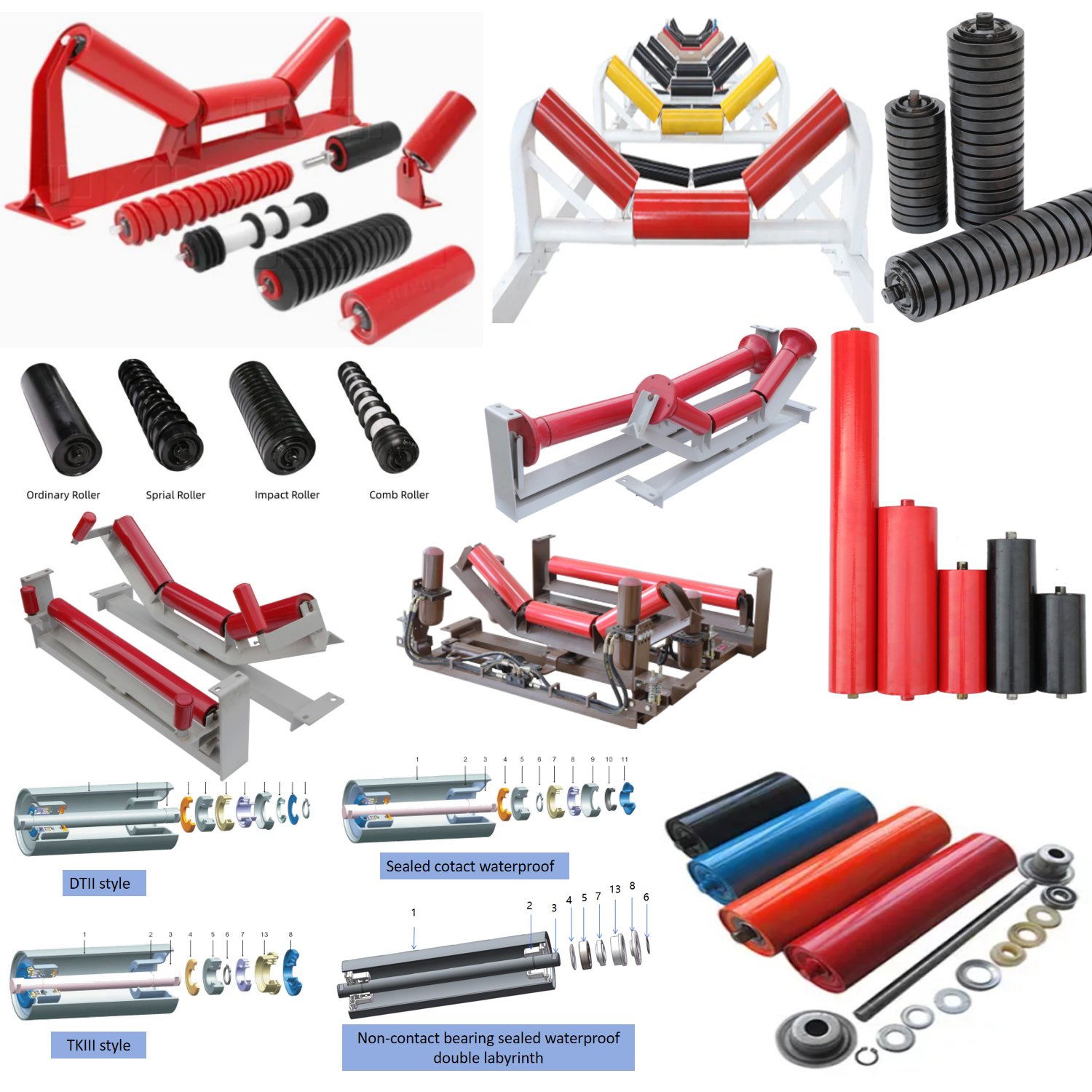
Before diving into maintenance, it's crucial to understand idler construction. A standard conveyor idler consists of:
Outer Shell/Roller: Typically made from steel, polyethylene, or ceramic, designed to withstand material impact and abrasion.
Bearings: Precision components (usually deep-groove ball bearings) that enable smooth rotation.
Shaft: The central structural element that supports the roller assembly.
Seals: Multi-labyrinth or contact seals that prevent contaminants from entering the bearing assembly.
Grease Reservoir: In some designs, this provides continuous lubrication to bearings.
These support the loaded section of the conveyor belt. Regular maintenance includes checking for:
Belt misalignment indicators
Troughing angle integrity
Surface wear from material abrasion
Positioned beneath the conveyor to support the empty belt return. Maintenance focuses on:
Debris accumulation removal
Checking for belt material buildup
Verifying proper alignment to prevent edge damage
Installed at loading zones to absorb material冲击. Special attention should be paid to:
Rubber disc condition and resilience
Structural integrity under repeated impact
Spacing verification for optimal impact absorption
Designed to correct belt mistracking. Maintenance involves:
Pivot mechanism lubrication
Friction surface inspection
Centering spring tension verification
Used for belt cleaning and preventing material buildup. Maintenance includes:
Cleaning spiral or disc surfaces
Checking for missing or damaged elements
Verifying rotational freedom
Visual Inspection: Check for obvious damage, misalignment, or seized rollers
Listen for Unusual Noises: Grinding, scraping, or clicking sounds indicate potential bearing failure
Monitor Temperature: Use infrared thermometers to detect overheating bearings
Check for Material Buildup: Remove accumulated debris that can cause imbalance
Verify Belt Tracking: Ensure the belt runs centrally on the idlers
Complete System Inspection: Walk the entire conveyor length
Rotation Testing: Manually check a sample of idlers for free rotation
Frame Inspection: Look for loose bolts, corrosion, or structural issues
Lubrication Check: Verify grease levels in lubricated idlers
Wear Measurement: Document idler diameter reduction trends
Bearing Play Assessment: Check for excessive axial and radial play
Seal Integrity Verification: Ensure contaminants aren't entering bearing housings
Load Testing: Monitor idler performance under normal operating loads
Comprehensive Cleaning: Remove all material buildup from idlers and frames
Alignment Verification: Use laser alignment tools for precision assessment
Sample Idler Disassembly: Inspect internal components for wear patterns
Grease Analysis: For systems using lubricated idlers, check grease condition
Vibration Analysis: Use specialized equipment to detect early bearing failure
Corrosion Prevention: Apply protective coatings to idlers in corrosive environments
Complete System Documentation: Update maintenance records with current conditions
Statistical Sampling: Test a representative percentage of idlers
Bearing Replacement: Proactively replace bearings in high-stress areas
Upgrade Assessment: Evaluate new idler technologies that might improve performance
Training Review: Ensure maintenance staff follow updated procedures
Spare Parts Inventory: Verify adequate stock of critical components
Causes: Bearing failure, contamination, improper installation, lack of lubrication
Solutions:
Implement regular rotation checks
Improve sealing systems
Establish proper lubrication schedules
Replace with sealed, maintenance-free idlers in problematic areas
Causes: Abrasive materials, misalignment, overloading, improper idler selection
Solutions:
Install wear-resistant coatings
Use ceramic or polyethylene idlers in high-abrasion areas
Implement proper loading procedures
Regularly check and correct belt alignment
Causes: Damaged bearings, imbalance, misalignment, structural issues
Solutions:
Conduct regular vibration analysis
Balance idlers during installation
Ensure proper frame support and alignment
Replace noisy idlers before catastrophic failure
Causes: Sticky materials, improper idler selection, insufficient cleaning systems
Solutions:
Install self-cleaning idlers
Implement belt cleaning systems
Use spiral or rubber disc idlers
Establish regular cleaning schedules
Challenge: Extreme abrasion from ore and aggregates
Special Maintenance: Weekly inspections, impact idler reinforcement, abrasion-resistant coatings
Recommended Intervals: Daily visual checks, monthly comprehensive inspections
Challenge: Dust penetration and biological material accumulation
Special Maintenance: Enhanced sealing systems, regular cleaning to prevent biological growth
Recommended Intervals: Weekly cleaning, quarterly bearing inspection
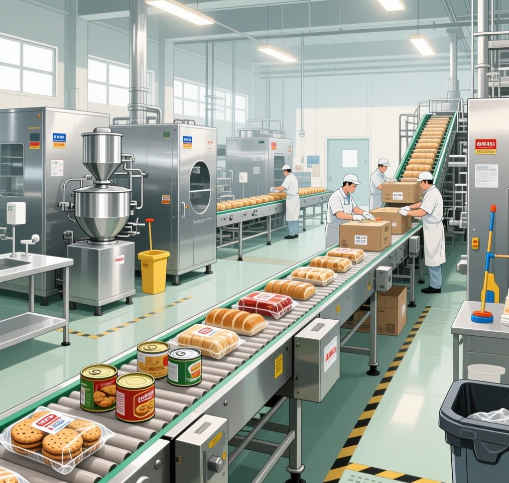
Challenge: Sanitation requirements and washdown corrosion
Special Maintenance: Stainless steel components, FDA-approved lubricants, frequent sanitation
Recommended Intervals: Daily cleaning, monthly corrosion checks
Challenge: High-speed operation and varying loads
Special Maintenance: Precision alignment, vibration monitoring, rapid replacement protocols
Recommended Intervals: Weekly alignment checks, monthly vibration analysis
Challenge: Continuous operation and combustible dust
Special Maintenance: Explosion-proof considerations, thermal monitoring, preventive replacement schedules
Recommended Intervals: Daily thermal checks, quarterly preventive replacements
Essential tools for effective idler maintenance include:
Infrared thermometers
Vibration analyzers
Laser alignment tools
Proper lifting equipment for idler replacement
Bearing pullers and installation tools
Grease guns with appropriate fittings
Wear measurement devices
Document current idler conditions throughout your system, noting problem areas and failure patterns.
Create maintenance intervals based on your specific operating conditions, not just manufacturer recommendations.
Ensure maintenance personnel understand proper procedures and document all work performed.
Implement condition monitoring technologies to move from scheduled to predictive maintenance.
Regularly analyze maintenance data to identify trends and improve procedures.
Effective idler maintenance provides significant returns:
Reduced Downtime: Proper maintenance can decrease conveyor-related stoppages by up to 70%
Extended Component Life: Regular maintenance can triple idler lifespan
Energy Savings: Well-maintained idlers reduce friction, lowering power consumption by 5-15%
Belt Life Preservation: Properly functioning idlers significantly extend conveyor belt life
Safety Improvements: Reduced failure rates decrease accident risks
A comprehensive conveyor idler maintenance program is not an expense but an investment in operational reliability, efficiency, and safety. By understanding the different idler types, implementing regular maintenance schedules, and addressing industry-specific challenges, organizations can dramatically improve their material handling system performance. The most successful maintenance programs combine scheduled inspections with condition monitoring, trained personnel with proper documentation, and continuous improvement based on performance data. Remember that idler maintenance doesn't exist in isolation—it's part of an integrated approach to conveyor system management that includes proper installation, operation, and monitoring for optimal results.
Proactive maintenance today prevents costly downtime tomorrow. Start by assessing your current idler condition, developing a tailored maintenance schedule, and training your team in proper procedures. Your conveyor system—and your bottom line—will thank you.
 Top 10 Conveyor Roller Supplie
 The Belt Conveyor System: A Co
 Comprehensive Analysis of Belt
 Key Components of Belt Conveyo